Hidden Water Leak Detection in Hamilton, NJ
Plumbing networks are designed to be out of sight, which means when a pipe fails, the resulting water damage often goes unnoticed until it has caused significant harm to your property. If you suspect a problem but cannot locate the source, you need professional water leak detection Hamilton NJ to pinpoint the issue before structural damage occurs or mold begins to grow.
At NJ Leak Detection, we specialize in finding hidden plumbing leaks behind drywall, above ceilings, and underneath finished flooring in residential and commercial properties throughout the Hamilton area. By employing advanced, non-destructive technology, we remove the guesswork and prevent the unnecessary demolition of your home's interior.
Warning Signs of a Hidden Plumbing Leak
Hidden water leaks rarely announce themselves with a sudden flood; they usually present subtle signs that grow worse over time. Pay attention to these common indicators:
- Unexplained Rising Water Bills: A consistent increase in your municipal water bill without a change in household usage is often a primary indicator of a continuous leak.
- Continuous Meter Movement: If your water meter indicator is spinning while all fixtures and appliances are turned off, water is actively escaping the pressurized supply system.
- Damp Drywall and Unexplained Stains: Yellow or brown water rings on ceilings, or bubbling and peeling paint on walls, indicate moisture accumulating behind the surface.
- Musty and Mold-Like Odors: A persistent damp, earthy smell in specific rooms or cabinets suggests standing water or mold growth caused by a hidden leak.
- Warm Floor Areas: Unusually hot spots on your floor can indicate a slab leak on the hot water line.
Our Non-Invasive Detection Process
Older homes in neighborhoods like Hamilton Square and Mercerville often have aging copper or galvanized pipes hidden behind plaster or drywall. Simply cutting holes based on where water is pooling is highly inefficient, because water often travels along framing and pipes far from the actual breach.
We utilize specialized equipment for pinpointing before opening walls:
- Acoustic Listening: Highly sensitive audio equipment allows us to "hear" the precise sound frequency of pressurized water escaping a pipe inside a wall cavity.
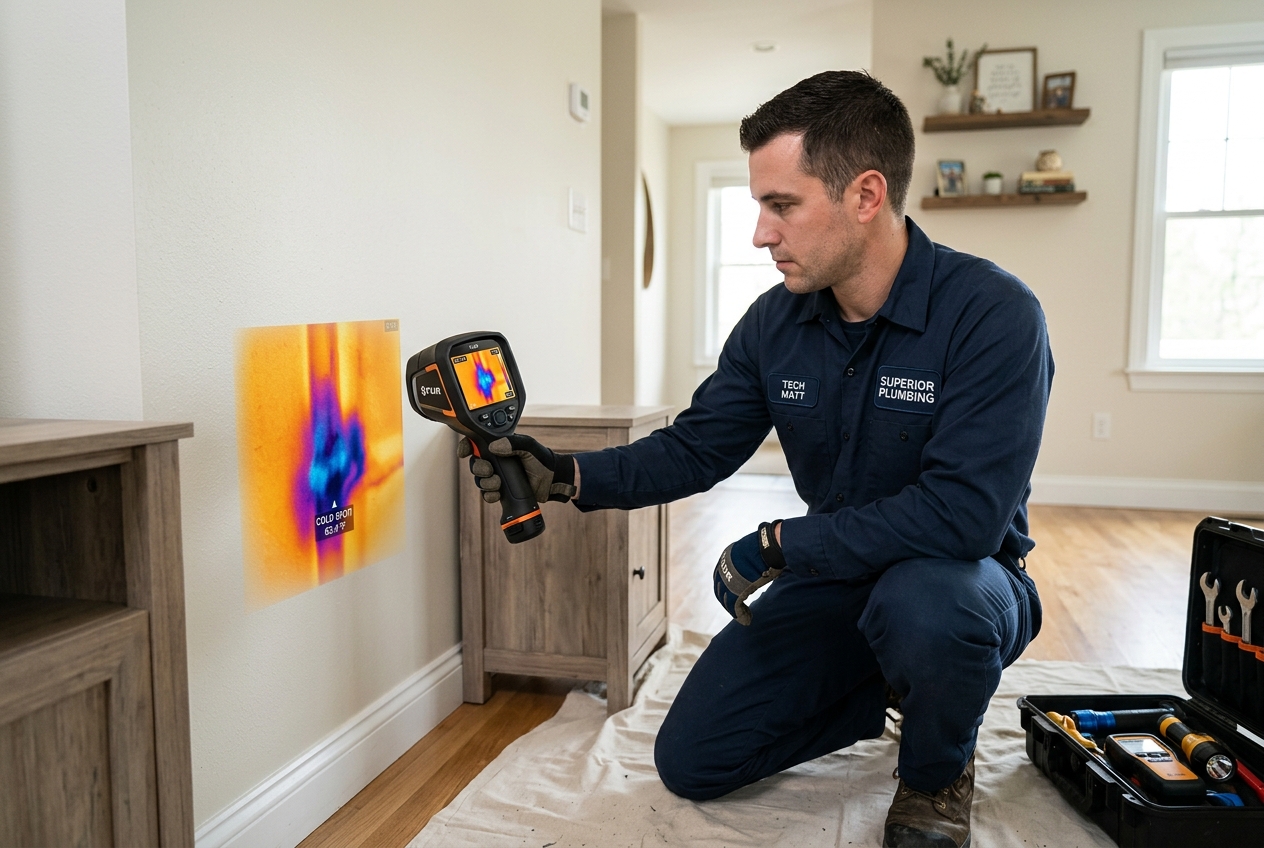
- Thermal Imaging: Infrared cameras help us visualize temperature anomalies behind finished surfaces, allowing us to track the path of the moisture without breaking drywall.
- Moisture Mapping: Using specialized meters, we track the spread of moisture through building materials to define the extent of the water migration.
- Pressure Testing: By isolating sections of your plumbing system and monitoring pressure changes, we can definitively determine which lines have sustained a breach.
- Tracer Gas: In complex situations, introducing a safe, inert gas into empty pipes and detecting where it escapes helps pinpoint micro-leaks.
What Happens After We Locate the Leak?
Once the exact location of the hidden water leak is identified, the next step is accessing the pipe with minimal disruption. Because we know precisely where the problem lies, the structural opening required is vastly smaller than it would be using traditional exploratory methods. Following the detection, we can discuss the most sensible pipe leak repair options, whether it involves a localized fix, replacing a damaged section, or considering a broader plumbing update if the surrounding pipes show severe deterioration.
Frequently Asked Questions
Our detection process is non-invasive, meaning we use thermal and acoustic tools to find the leak's exact location first. The wall or ceiling only needs to be opened once we have pinpointed the spot, limiting the access hole to the precise area requiring repair.
Water follows the path of least resistance. A leak might occur in the ceiling space, but the water will run down along floor joists or wall studs before finally pooling and soaking through the drywall several feet away.
Yes. Finding the source of water behind the finished walls of a basement requires identifying whether the issue is a pressurized plumbing leak or a basement groundwater issue. We can determine if the plumbing system is the culprit without tearing down the finished walls.