Pool Leak Detection in Hamilton, NJ
Backyard pools are common throughout Hamilton, especially in areas with larger lots like Groveville and Nottingham. When a pool begins losing water faster than evaporation can explain, it creates stress for homeowners. Finding the exact source of a pool plumbing leak is complex because the lines run underground beneath concrete decking. Professional pool leak detection Hamilton NJ residents rely on is necessary to prevent extensive damage to the surrounding landscaping and pool shell.
At NJ Leak Detection, we use specialized pressure testing and dye testing methods to isolate and identify leaks in your pool's infrastructure without needlessly breaking up your patio.
Is it a Leak or Just Evaporation?
During the hot New Jersey summer, normal evaporation can account for up to a quarter-inch of water loss per day. To determine if you have an actual inground pool leak, we recommend the bucket-test concept: place a weighted bucket on the top step of the pool, fill it with water to match the pool's water level, and mark both levels. If the pool water level drops significantly more than the water inside the bucket over 24 hours, you likely have a leak in the structure or plumbing.
Common Areas for Pool Plumbing Leaks
Pool systems have several potential failure points, particularly when subjected to the freezing and thawing cycles common in Mercer County. Potential issues include:
- Skimmers: The seal where the plastic skimmer meets the concrete shell frequently fails due to ground movement or freeze damage.
- Return Lines: The underground pipes carrying filtered water back to the pool can crack under pressure or age.
- Suction Lines: Leaks here often pull air into the pump system, visible as bubbles returning to the pool.
- Light Niches: The conduit housing the pool light wiring is a common, often overlooked source of water loss.
How We Locate the Problem
We systematically check the entire pool system to isolate the failure. Depending on the symptoms, potential testing methods may include:
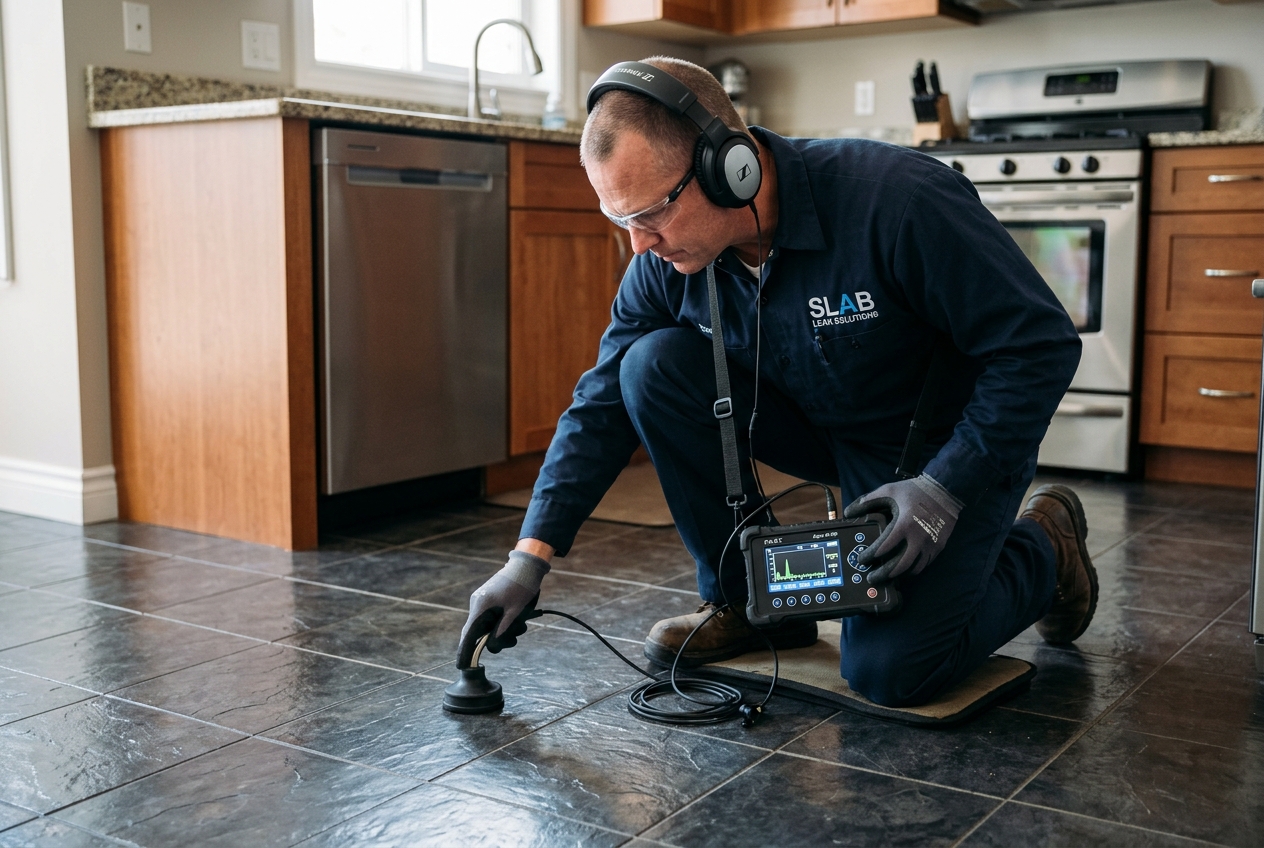
- Pressure Testing: We seal off the return lines, suction lines, and main drains, then apply controlled pressure to determine which specific plumbing run is losing water. Once a line is identified as compromised, acoustic equipment can be used to listen for the leak underground.
- Dye Testing: For suspected structural leaks around skimmers, return jets, or light niches, we release a concentrated dye near the suspect area. If a leak is present, the dye will be drawn visibly into the crack or failed seal.
Repairing the Leak After Detection
Discovering the leak is only the first phase. Once pinpointed, the repair strategy depends on the location. If the leak is in the underground pool plumbing, a localized pipe leak repair will involve opening a small section of the deck. If the issue is a skimmer seal or light niche, repairs can often be made using specialized underwater epoxies or by replacing the fixture housing.
Addressing these issues is especially critical before winterizing your pool, as trapped water in a leaking pipe can freeze, expand, and cause catastrophic damage before the spring opening.
Frequently Asked Questions
Typically, pools lose between 1/8 to 1/4 inch of water per day due to evaporation, depending on temperature, wind, and humidity. Anything more than that warrants investigation.
No. We perform our dye testing and pressure testing while the pool is full. Draining the pool can actually make finding the leak harder and potentially damage the pool structure.
If pressure testing indicates the leak is in an underground line, we use acoustic equipment to locate the exact spot beneath the concrete. This means if a repair is needed, only a minimal section of the patio has to be removed.